
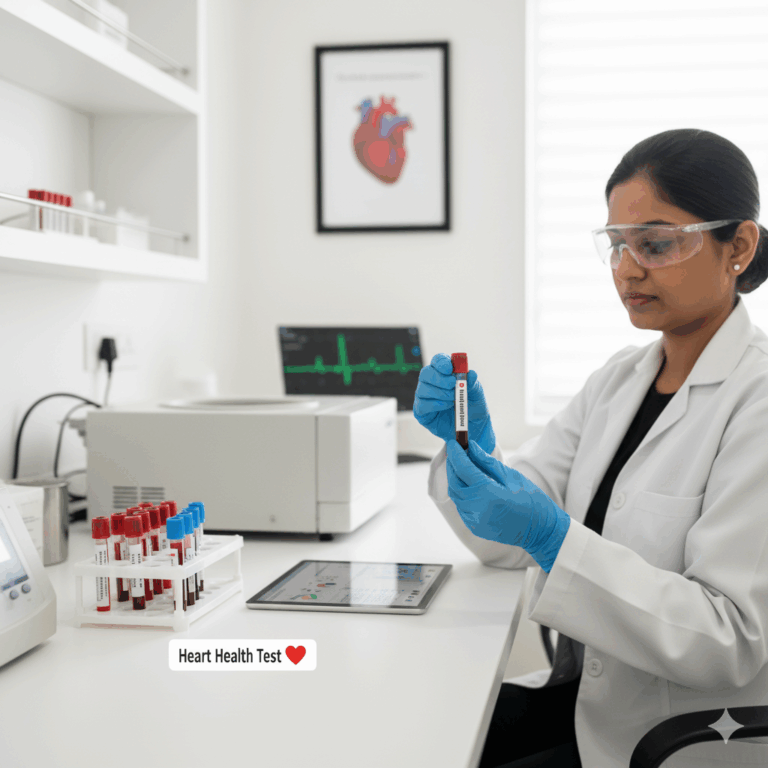
Heart health is one of the most important aspects of overall well-being. Many heart conditions develop silently over time without any noticeable symptoms. Regular blood tests can help detect these risks early and prevent serious heart problems. We focus on preventive testing and accurate diagnostics to help you maintain a healthy heart.
Why Blood Tests Matter for Heart Health
Blood tests play a key role in identifying risk factors that can lead to heart disease. They allow doctors to understand how your body functions and detect problems even before symptoms appear.
Common tests for assessing heart health include:
- Lipid Profile: Measures cholesterol and triglycerides, which indicate heart disease risk.
- Blood Sugar Test: Detects diabetes or prediabetes major contributors to heart problems.
- Liver and Kidney Function Tests: Evaluate organ health since poor function can strain the heart.
- High-Sensitivity C – reactive protein (hs-CRP): Detects inflammation linked to heart disease.
Early detection through these tests allows for timely treatment, dietary changes, and lifestyle improvements that can protect your heart in the long run. You can easily access these tests at our Blood Test Centre in Kharghar, where accurate results and expert support make preventive care simple and convenient.
What a Blood Test Can Tell You
A blood test reveals much more than just heart-related concerns. It provides a complete picture of your health:
- Overall Health Check – Shows how well your heart, liver, and kidneys are functioning and helps detect hidden issues early.
- Heart Disease Risk – Identifies high cholesterol, blood sugar, or inflammation that may increase heart risks.
- Hormone and Thyroid Levels – Detects thyroid or hormonal imbalances affecting energy and metabolism.
- Vitamin and Mineral Levels – Reveals deficiencies like low vitamin D, B12, or iron that can cause tiredness and weak immunity.
- Detects Infections – A CBC test highlights infections, anemia, or immune-related conditions.
Routine testing is available not only in Kharghar but also at Blood Test Centre in Sea woods, Blood Test Centre in Khopat, and Blood Test Centre in Kurla, ensuring access to reliable diagnostics wherever you are.
Regular blood testing helps you monitor these areas and take preventive action before problems become serious.
What to Do Before and After a Blood Test
Before the Test:
- Fast for 8–12 hours if required (only water allowed).
- Stay hydrated for an easier blood draw.
- Avoid alcohol and oily foods for at least 24 hours.
- Consult your doctor about any regular medicines.
- Rest and stay calm before testing.
After the Test:
- Press gently on the puncture site to prevent bruising.
- Eat a light meal, especially if you were fasting.
- Drink water or juice to rehydrate.
- Avoid heavy physical activity for a few hours.
- Review your reports with your doctor once available.
Our Blood Test Centre in Kalyan also offers home collection services, making it convenient for patients who prefer testing from the comfort of home.
Take Charge of Your Heart Health
Your heart deserves regular attention. Routine blood tests help identify risks early and keep your health on track. By choosing NDC Diagnostic Centre, you take a smart step toward preventive care and long-term well-being .We combines modern equipment, experienced staff, and fast reporting to ensure accurate and reliable results. Whether you need a routine check-up or a detailed heart health assessment, we make the process simple and comfortable.